RSS

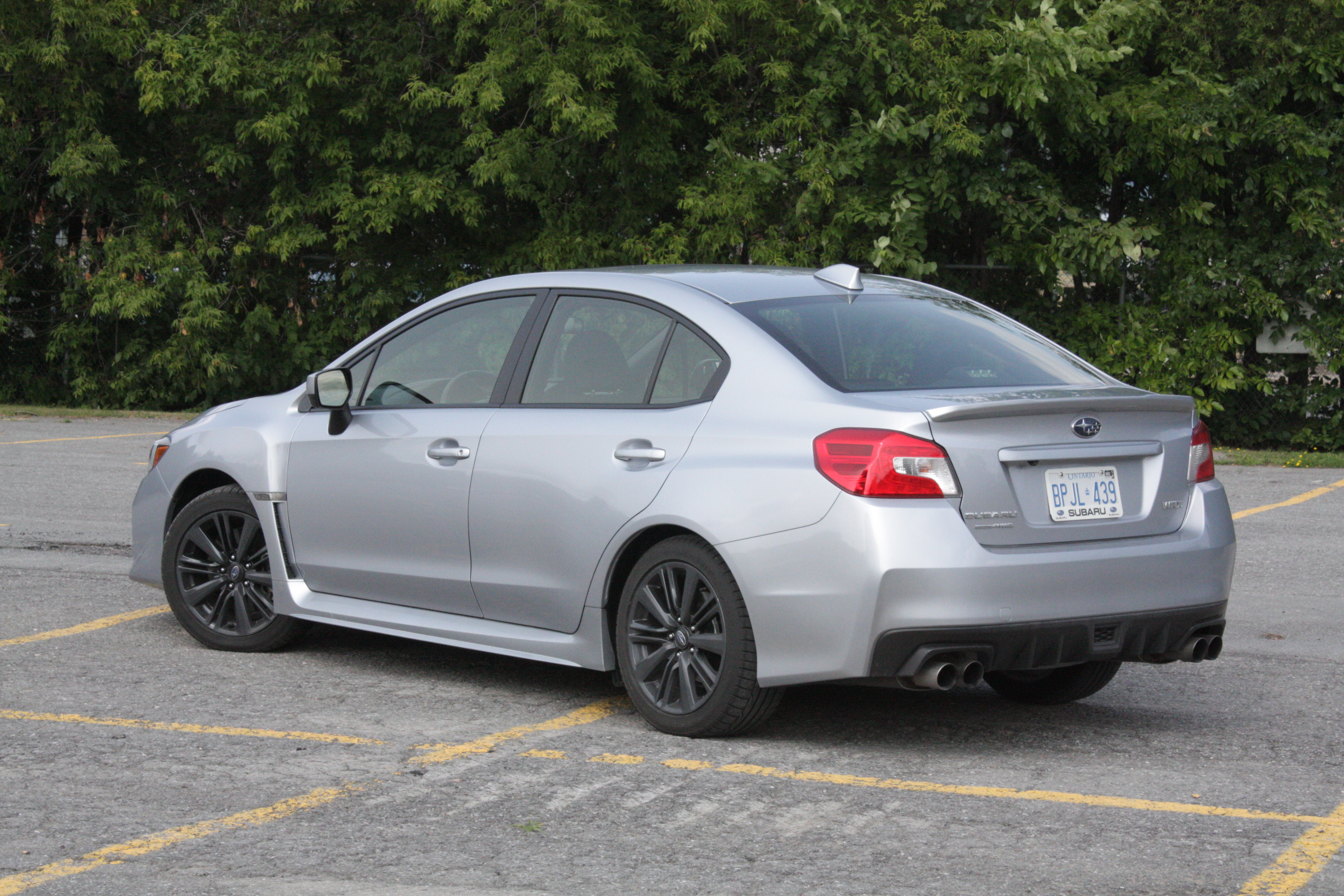
Straight Eight: 2015 Subaru WRX

IMG_2449

Exterior photos by Chris Chase; Interior photos courtesy Subaru Canada

1. More than meets the eye
Subaru’s high-performance WRX is based on the compact Impreza, but the differences between them are greater than they might appear based on exterior appearance. The WRX’s turbocharged motor nearly doubles the power output of the Impreza’s, and its drivetrain is beefed up to handle all that power.
2015_SubaruWRX_061

2. Surprisingly practical
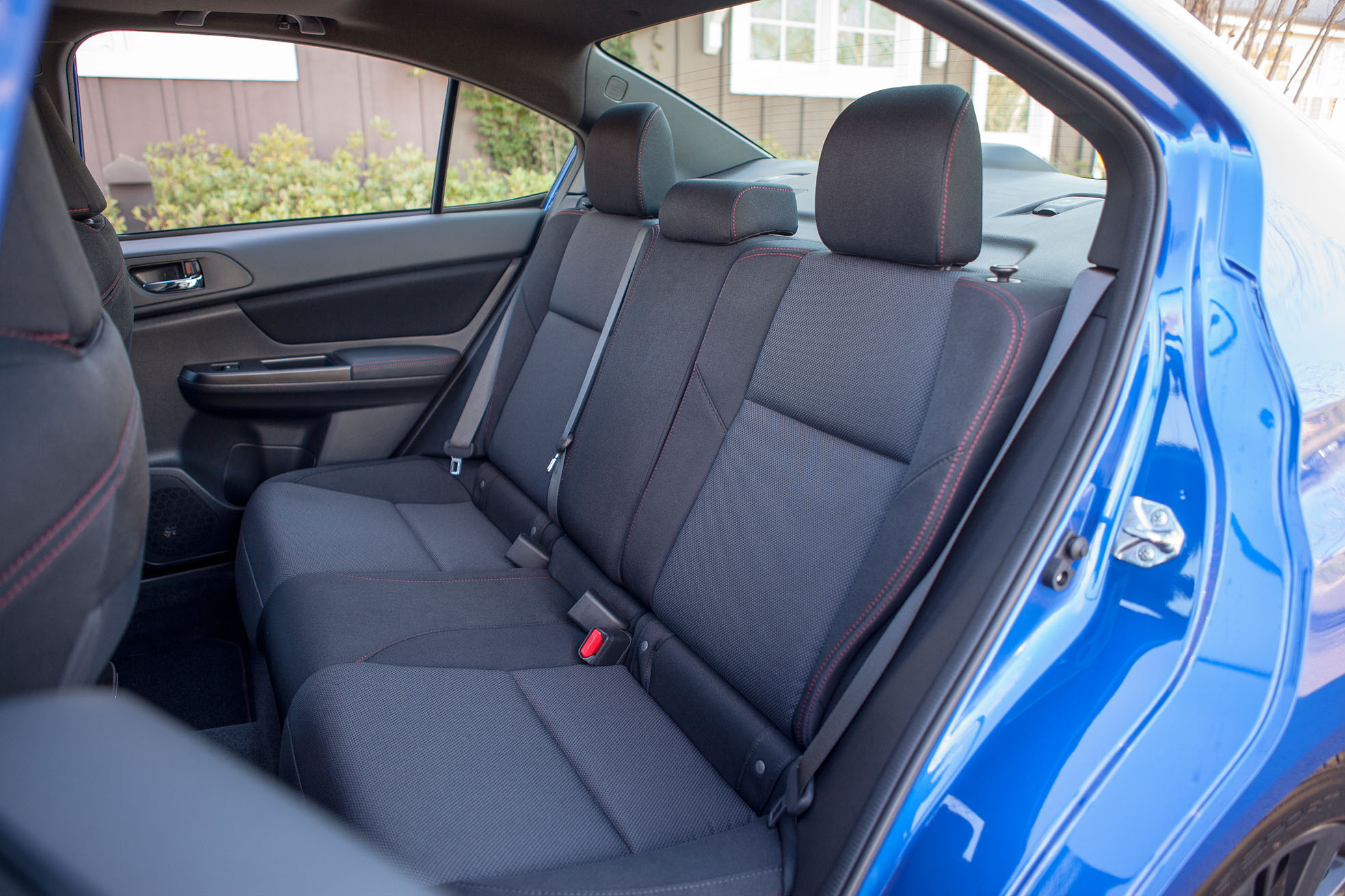
Due to its four-door sedan roots, the WRX is that rare sports car that comes with everyday practicalities such as plenty of rear-seat and trunk space. I do miss the hatchback body style of the previous-generation model, though.

3. Rally-ready
If you’re like me, you’ll forget about the lack of a hatchback once you hit the gas. It’s not a scary-fast car, but it’s pretty damned quick, and the all-wheel drive system gets the power down efficiently. Want to feel like a rally driver? Hit the gas as you power through a corner, and feel the rear wheels push the car through the curve.
2015_SubaruWRX_057

4. Transmission switch-up
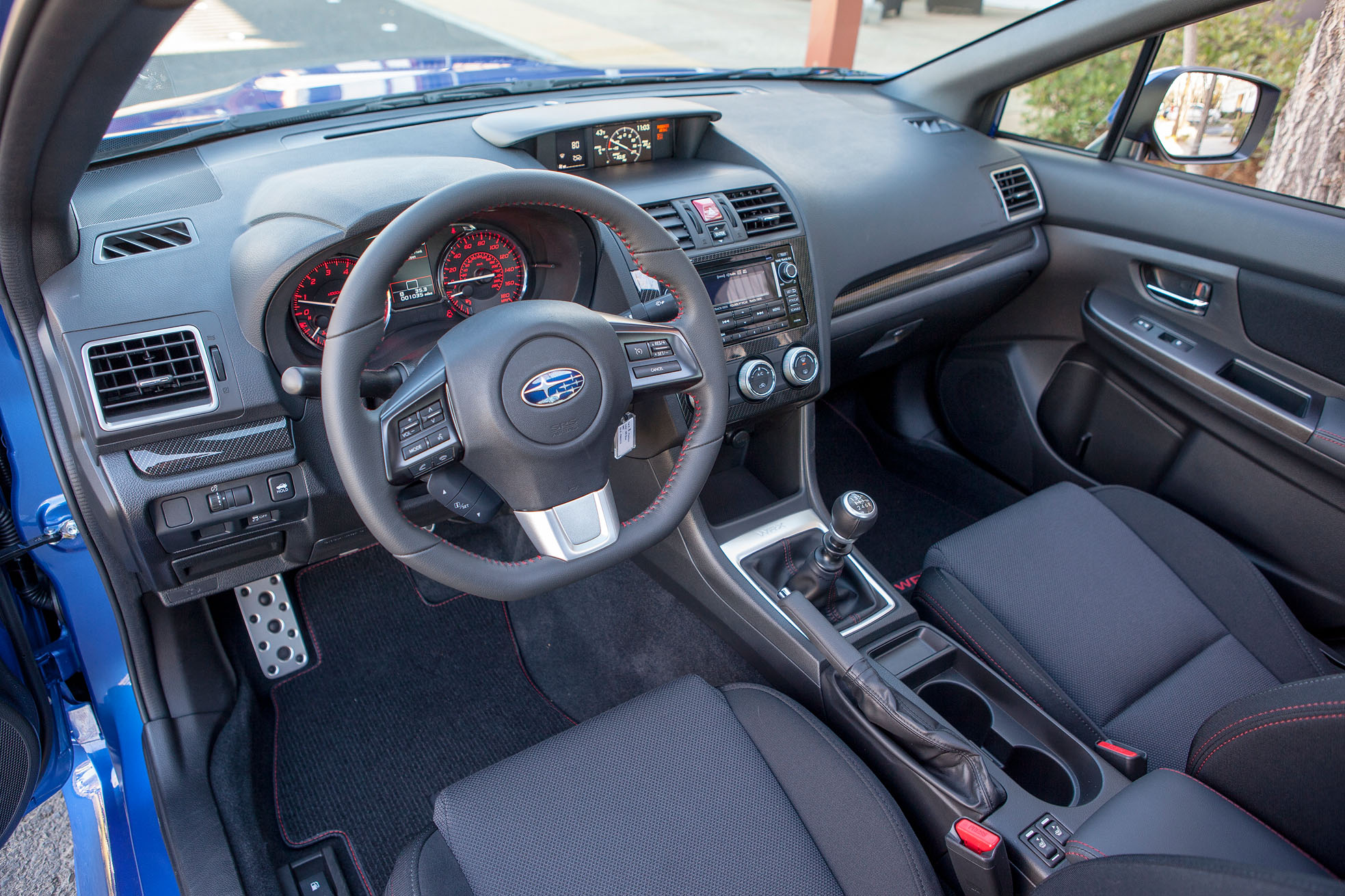
My tester had the standard six-speed manual transmission. The option is a continuously variable automatic, but – no offense to those who don’t drive stick – that’s not the transmission that belongs in this car. The clutch is heavy for driving in heavy traffic, but the shifter feels deliciously precise and mechanical in its movement.

5. What’s that sound?
I’ve long complained about Subaru’s poor-sounding stereo systems. This one’s better than in the last WRX I drove (a few years ago), but it’s clear that Subaru’s focus was on making this car fun to drive, not fun to listen to.

IMG_2451

6. Efficient fun
The WRX’s fuel economy has come a long way: I averaged 8.0 L/100 km in an even mix of city and highway driving, which matches the Subaru’s highway estimate for the car. In straight highway driving, I averaged less than 7.0 L/100 km, which is pretty great for a performance car at cruising speeds close to 120 km/h.

2015_SubaruWRX_059

7. Comfortable support
Well-bolstered seats are a necessity if your plan is to drive this car in any manner close to what it was designed for. These ones are, but not so aggressively that they’re a pain to repeatedly get in and out of while running weekend errands. Plus, they’re comfortable for long drives.
IMG_2452

8. Lower price, low profile
At $30,000, the 2015 WRX costs $2,500 less than the car it replaces, which is always good. But my favourite thing about the WRX? It looks enough like its downmarket Impreza cousin to avoid attracting too much attention – especially from the cop you just sped past.

 
1 Comment

Posted by on August 13, 2014 in Straight Eight, Subaru


Tags: , , , , , ,

Straight Eight: 2014 Mini Cooper

IMG_2464

1. New look
What you see here is the third generation of the “new” Mini Cooper. Base price is $20,900; options in my tester ran that up to $24,470. Its larger, bulky-looking exterior is polarizing; personally, I prefer the looks of the previous car.

2. Big comfort
I day-tripped this one from Ottawa to a friend’s house on the east side of Toronto, and after the eight-hour round-trip, I was less tired than I have been after long drives in more luxurious cars.

IMG_2472

3. Great soundtrack
Entry-level models use a new turbocharged three-cylinder engine that’s more powerful than the four-cylinder in last year’s base car, and it produces an adorable, hilarious symphony of turbo-related whooshes, whistles and sighs as you accelerate and brake your way around city streets.

4. Thrifty shifting
That extra power is tempered by “taller” gearing that keeps engine speeds low, and bumps fuel economy up: my test car averaged 8.0 L/100 km in the city, and 5.0 L/100 km in highway driving at an average speed of just under 100 km/h.

IMG_2465

5. All grown up, sadly
There was an urgency to the previous Cooper’s driving feel. Where’d it go? The new one is still fun to drive, with a nice balance in turns and sharp steering, but on the whole it feels softer and more relaxed.

IMG_2468

6. Rev me up
The manual transmission has a rev-match downshift function that makes you feel like a superstar driver every time you downshift for a corner, and generates more of the engine’s fun noises. However, I prefer doing this myself when I drive a stickshift, and I couldn’t find any way to disable it.

7. The fun switch
Toggle the car into sport mode: throttle sensitivity goes way up, and you discover that this is the best way to experience this car. Sport mode also firms up the optional adjustable suspension ($500!), but this makes the car uncomfortable on rough roads. Thankfully, you can set it to leave the suspension alone.

IMG_2474

8. Dude, where’s my speedo?
You’ll notice some changes inside. I like that there’s a bit more space, and that the electric window controls now live on the doors. I never thought I’d say it, but I miss the massive speedo in the middle of the dash that was legible from three cars back and two lanes over.

 
Leave a comment

Posted by on August 11, 2014 in Mini, Straight Eight


Tags: , , , , , ,

Straight Eight: 2014 Jeep Grand Cherokee diesel

IMG_2401

1. A nice price – to start
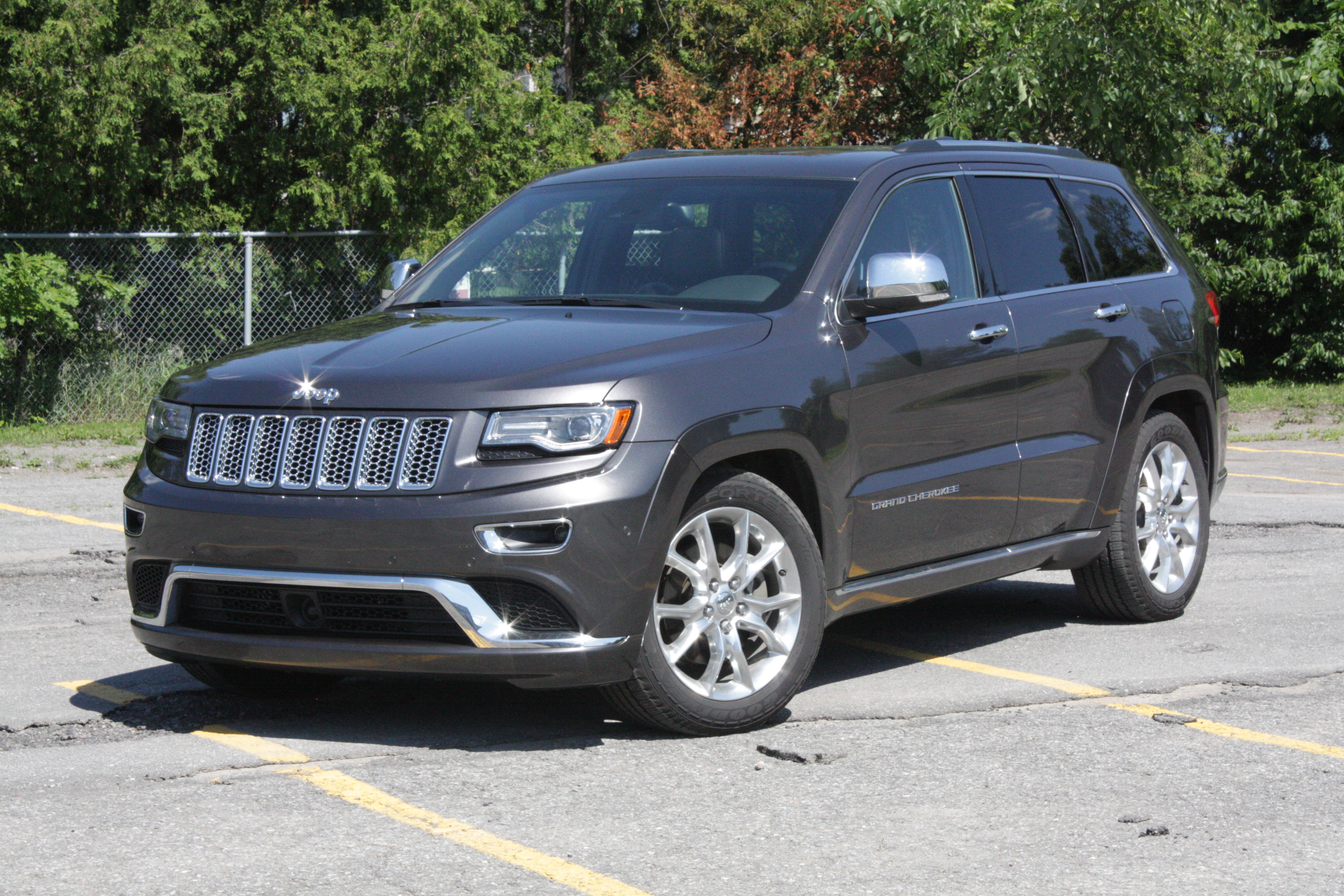
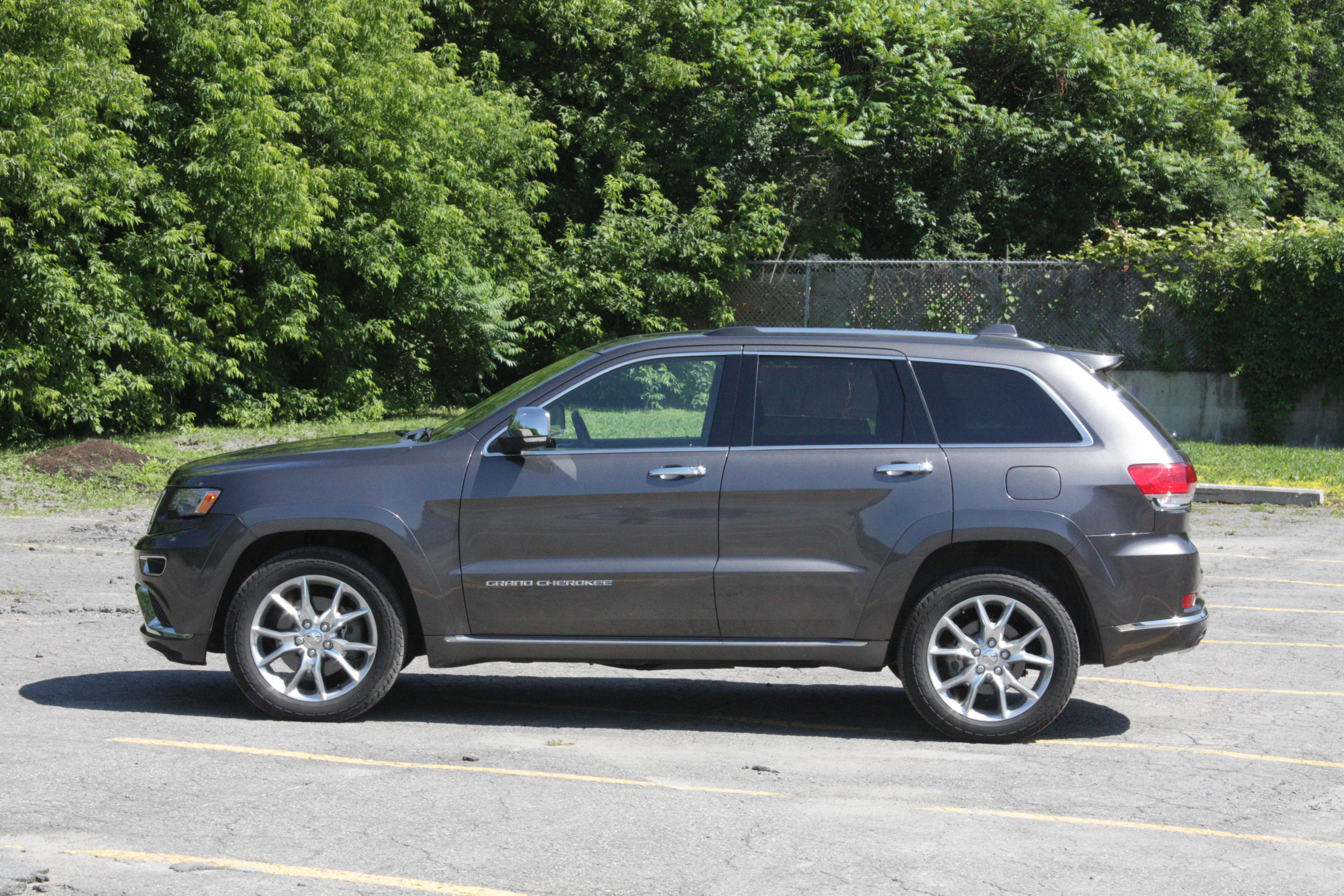
The Grand Cherokee has been Jeep’s flagship model since1993. A starting price of about $40,000 makes it affordable for a comfortable, capable SUV, but that number reaches well north of $60,000 in Summit trim, and that doesn’t count the hip-hop video-worthy high-performance SRT-8 model.

IMG_2400

2. Diesel powered
With its optional 3.0-litre diesel V6, the Grand Cherokee is the only American-branded SUV offered with a diesel engine. That puts it in the same league as some pretty fancy competition, like the Mercedes-Benz ML-Class, Audi Q7, BMW X5, Volkswagen Touareg, and Porsche Cayenne.

IMG_2399

3. Fuel economy
My test vehicle averaged 10.5 L/100 km in city driving, a solid 25 to 30 per cent better than you could expect from the Grand Cherokee’s base gasoline V6, and about equal to a six-cylinder family sedan.

IMG_2404

4. Refinement
Modern diesels are known for their quiet, smooth performance. Jeep’s is quiet on the outside, but from the driver’s seat, it feels a little rougher and more truck-ish than most.

IMG_2406

5. Interior space
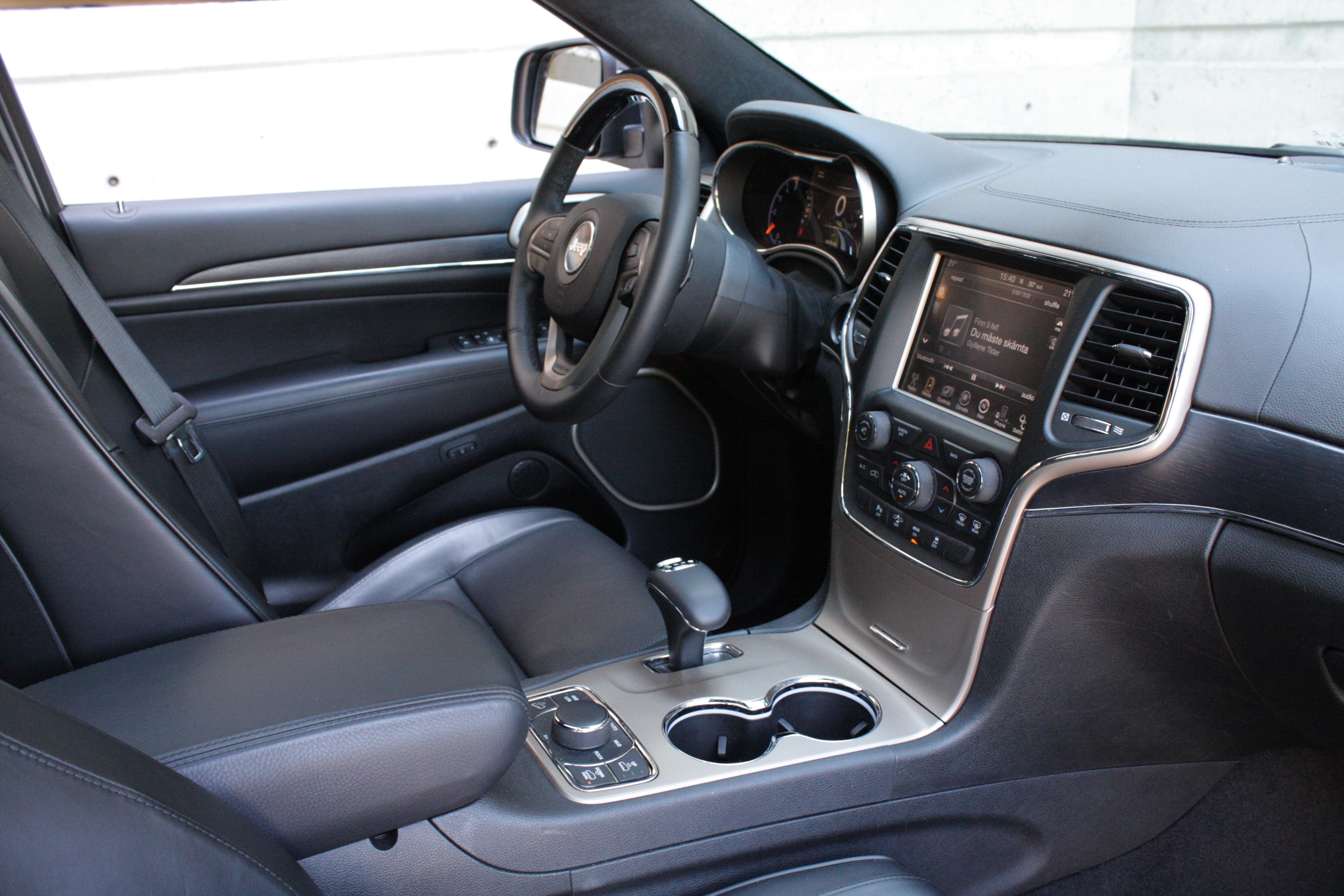
There’s less space inside the Grand Cherokee than its commanding exterior presence suggests. Hyundai’s Santa Fe is smaller on the outside but, subjectively, is about as roomy inside as the Jeep.

IMG_2412

6. Off-road capability
Pair the Quadra-Drive II 4WD system (the most capable of the three on offer) with the optional height-adjustable air suspension (my test vehicle had that, too), and you’ve got a luxurious truck that could go just about anywhere, if not for the tires obviously biased toward mall parking lots.

IMG_2402

7. Cool tech
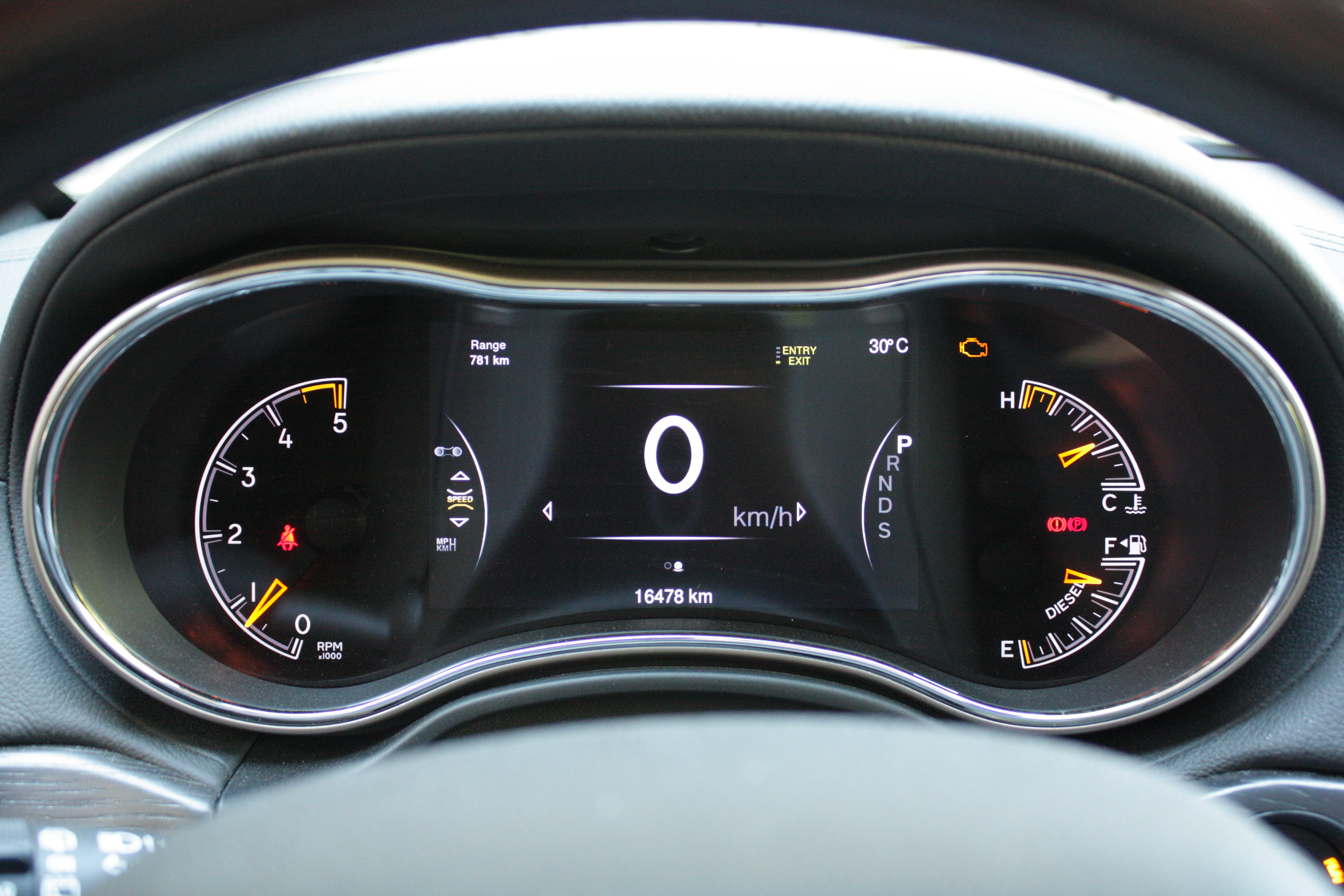
Jeep uses a thin-film transistor (TFT) instrument panel in the Grand Cherokee, a technology that’s becoming common in upscale vehicles. It allows a customizable gauge display, and in this case can be toggled between a digital speedometer and a representation of an analog gauge.

8. Jeep vs. Porsche
The Grand Cherokee you see here costs nearly $70,000. So does the diesel version of Porsche’s Cayenne SUV. That’s a lot of money no matter what, but the phrase “$70,000 Porsche” has a much different ring to it than “$70,000 Jeep,” don’t you think?

 
Leave a comment

Posted by on August 6, 2014 in Diesel, Jeep, Straight Eight


Tags: , , , , , , ,

Reviewed: 2013 Ford Fusion Energi

2013 Ford Fusion Energi

There are a number of cars that can be classified, accurately enough, as transportation appliances, but it doesn’t get much more appliance-like than a family sedan that you plug in when parked. The Ford Fusion Energi is far from the first car to come with a power cord, but it is one of the first PHEVs (plug-in hybrid electric vehicle) based on an existing car, and expands the Fusion line, which also includes conventional gasoline powertrains and a regular hybrid model. Read my full review at Autofocus.ca.

 
Leave a comment

Posted by on November 11, 2013 in Autofocus, Ford, Test Drives, What I Think


Tags: , , , ,

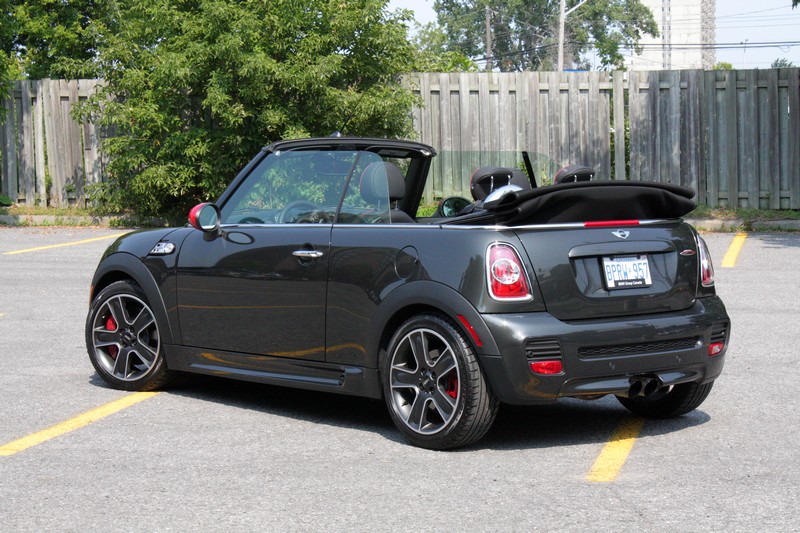
The 2013 Mini Cooper JCW convertible, and a guy named Marty

marty mini

This is Marty. I met him one August evening when he spotted me pulling my Mini Cooper S JCW convertible test car into the parking lot of a local shopping plaza. Marty’s a British ex-pat, from the City of Oxford, where BMW builds the modern Mini Cooper. He likes the car for that reason, but also because (unsurprisingly) he’s a fan of British cars in general. Not that this one is actually British in any way but its name, but whatever: he’d never so much as sat in one of these cars, so I took him for a quick spin to show off how nicely it goes.

2013-mini-cabrio-jcw_2

As a car reviewer, I’m supposed to be objective, but I was a car enthusiast first and I have no problem admitting that I *love* the Mini Cooper – even when it costs nearly $50,000, as this particular one does.

As great as this particular car is – the JCW boasts 208 hp and 192 lb-ft of torque, a bump up from the Cooper S’ 181 hp and 177 lb-ft – it’s really hard to justify at $50,000. In fact, you’d do just fine with a base model, with its 121-hp motor. As nice as the Cooper S’ turbo engine is, the car’s go-kart handling is the point, rather than straight-line performance.

Outrageous price aside, a week with this one helped cement the Mini Cooper’s place on my short-list of cars I’d like to own at some point.

 
Leave a comment

Posted by on August 23, 2013 in Convertibles, Mini


What I think: 2013 Nissan Altima

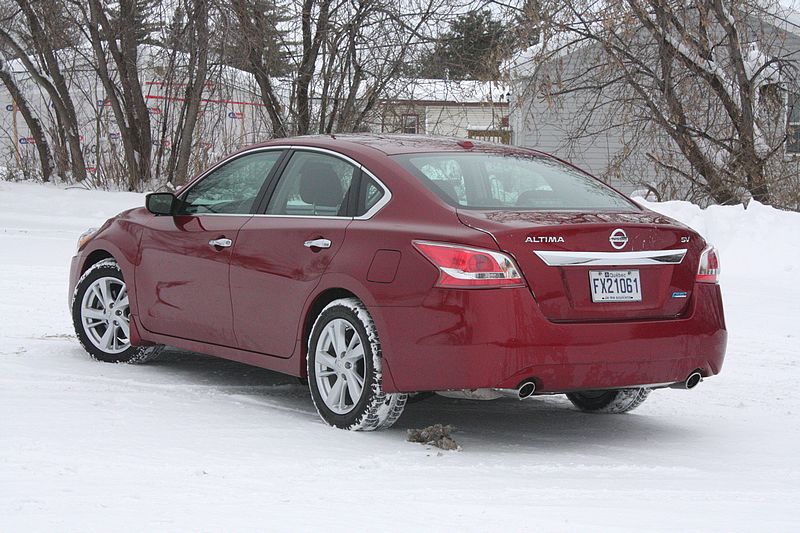
Nissan’s Altima doesn’t have the brand heritage that the Honda Accord and Toyota Camry possess in the family car segment, but Nissan must be doing something right: in 2011, the Altima outsold both of those cars.

2013-nissan-altima_cc_1001

Good news for Nissan, but all three of those cars were redesigned recently: the Camry for 2012, and the Accord and Altima this year. Given the improvements that Honda and Toyota have made to their family sedans, Nissan had some work to do to keep the Altima in the game.

2013-nissan-altima_cc_1005

Looks are important in any car segment, but are not paramount to success for a family car. The 2013 Altima does away with the frumpy look of the outgoing car, replacing it with a design reminiscent of a generation-old Lexus ES. Classy, but unexciting.

On the other hand, the interior design has been dumbed down, in my opinion. It looks fine and works well enough, but has a cookie-cutter look to it, where the old Altima’s interior neatly incorporated stylistic elements borrowed from the sporty 370Z coupe. Sporty isn’t what family sedans are about, so the 2013 Altima edges closer to the automotive equivalent of sensible shoes.

One of the most important parts of any car is a set of sensible seats. Nissan co-developed the Altima’s front chairs with NASA. These “zero gravity” buckets are presumably comfortable for someone, but not me; they hurt my back and made me glad I wasn’t doing any long-distance travel in this car. Balancing out the weirdly-shaped backrest was a soft bottom cushion. (At least one part of my backside was well taken care of.)

2013-nissan-altima_cc_002

The rear seat cushions are similarly soft, but here, the backrest angle is raked a few degrees too far back. It’s great for napping, but less so for those following mom’s advice to sit up straight.

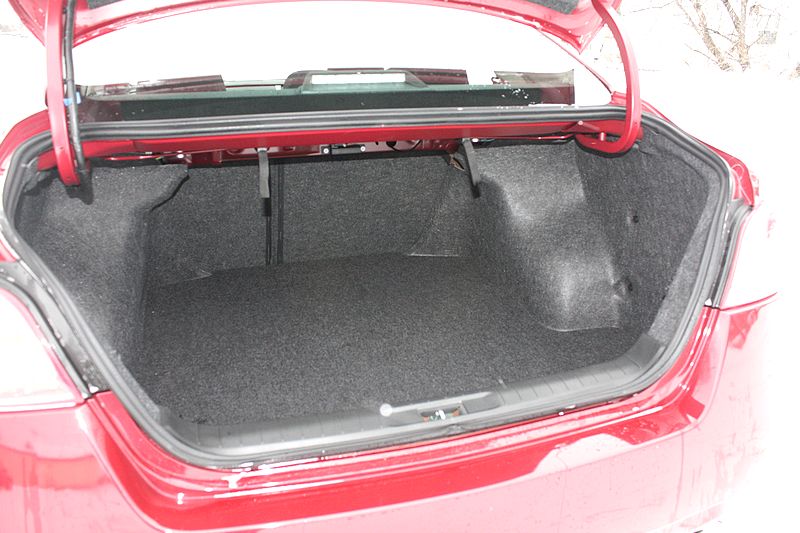
Headroom is more generous here than in the new Accord, but that car feels roomier overall. The Altima boasts similar trunk space and trumps the Accord by including a split-folding rear seat; in the Accord, you either fold all of it, or pay someone to deliver your Ikea purchase.

I was less impressed with the Altima’s interior quality. To be fair, everything looks good, and the materials mostly feel like they belong in a $30,000 car, but the dash generated a couple of buzzy, creaky noises that didn’t go away once the car was warm. A speaker grille in the top of the dash – front and centre for all to see – was poorly fitted, looking like it had warped slightly over years of exposure to hot sun, but my test car had just 4,000 km on its odometer.

2013-nissan-altima_cc_005

Nissan’s 2.5-litre four-cylinder is the volume seller in this car, and it boasts a nominal power increase to 180 hp for 2013. It’s not a sweet-sounding motor, so it’s best that the continuously variable transmission (CVT), standard in all Altimas, is good at keeping engine speeds well below the “buzz point.”

Nissan is known for CVTs and says this one has been redesigned with a view to reducing friction and increasing efficiency. The company’s fuel consumption claims are 7.4/5.0 L/100 km (city/highway); those are very impressive numbers that my test car didn’t stand a chance of matching in a week of cold, snowy weather, instead averaging just below 10 L/100 km in city driving.

I’ve long liked Nissan’s CVTs, but have found in the past that they favoured refinement over performance, so the cars felt slower than their power numbers would suggest (even if that was just a seat-of-the-pants perception). This Altima felt more responsive and eager to let the engine spin when acceleration is called for.

2013-nissan-altima_cc_003

The ride is fabulous, a near-perfect balance of comfort versus body control that trumps the Accord’s too-firm suspension tuning. Steering response is decent, but the electro-hydraulic power assist is a bit over-boosted; that’s a good thing at low speeds (like parking lot crawling), but makes the car feel less poised at highway speeds. Plus, the steering feels a bit “off” in sweeping corners, where Nissan’s Active Understeer Control kicks in to help keep the car on course. The company says it’s “almost undetectable,” but I detected it, and I didn’t like it. It sounds like a feature meant to augment performance at the car’s handling limit, but Nissan says its aim is to help improve steering accuracy in normal driving. Here’s something else I detected: Nissan overthinking the steering system in a family car.

No doubt, the Altima continues to be a good car. Its problem, following this redesign, is that it is neither as cushy as the latest Camry, nor does it boast a personality as sharply defined as the new Accord’s. It tries to strike a balance between the two, and mostly succeeds, but not comprehensively enough to make this a great car.

 
Leave a comment

Posted by on January 31, 2013 in Nissan, Test Drives, What I Think


Tags: ,

What I think: 2013 Honda Accord

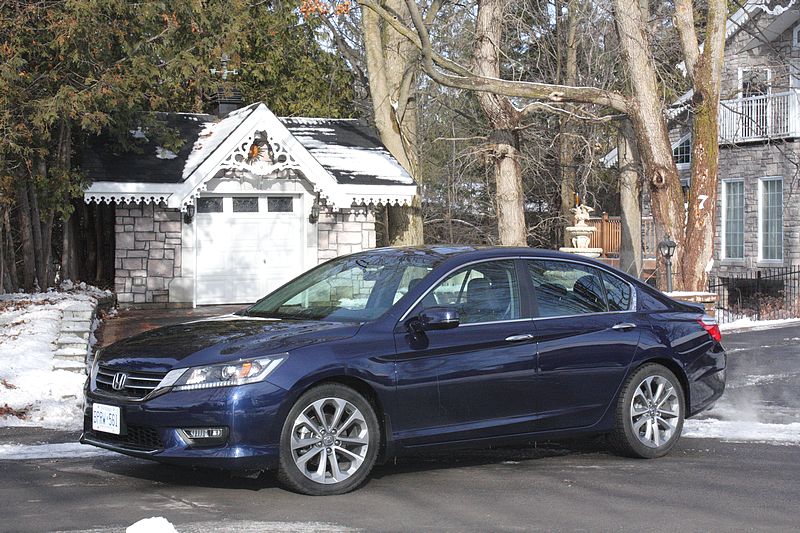
2013-honda-accord_cc_001

For the first time in a long time, Honda has a hit on its hands with the redesigned 2013 Accord. Click here for my review at Autos by Sympatico. In short, there is very nearly nothing wrong with this car.


Tags: ,

What I think: 2013 Hyundai Santa Fe

2013-hyundai-santa-fe_002

Another redesigned crossover; another redesigned Hyundai. Ho-hum. The Santa Fe is certainly not much to get excited about – unless you like getting lots of kit for not much money. In that case, then, yes, there’s plenty to like here, and in a vehicle that’s really quite nice to drive.

This, by the way, was my first review for my new full-time gig, with Autos by Sympatico.


Tags: ,

What I think: Long-term Hyundai Genesis Coupe

2013-hyundai-genesis-coupe_cc_1001

This summer, I spent a few weeks with a 2013 Hyundai Genesis Coupe 2.0T. I did a little bit of everything with this car: city slogging, highway cruising, and hauling heaps of stuff. Click through the links below to read my impressions of a car that was fun, but far from perfect.

July 20 – Introduction

August 17 – Update

September 14 – Update

October 19 – Update

November 16 – Conclusions


Tags: ,

What I think: 2013 Ford Escape

2013-ford-escape-se_cc_004

Ford’s redesigned Escape crossover is a good one, but the 1.6-litre turbocharged engine makes it great. Click here for my review at Autos.ca.


Tags: , , ,